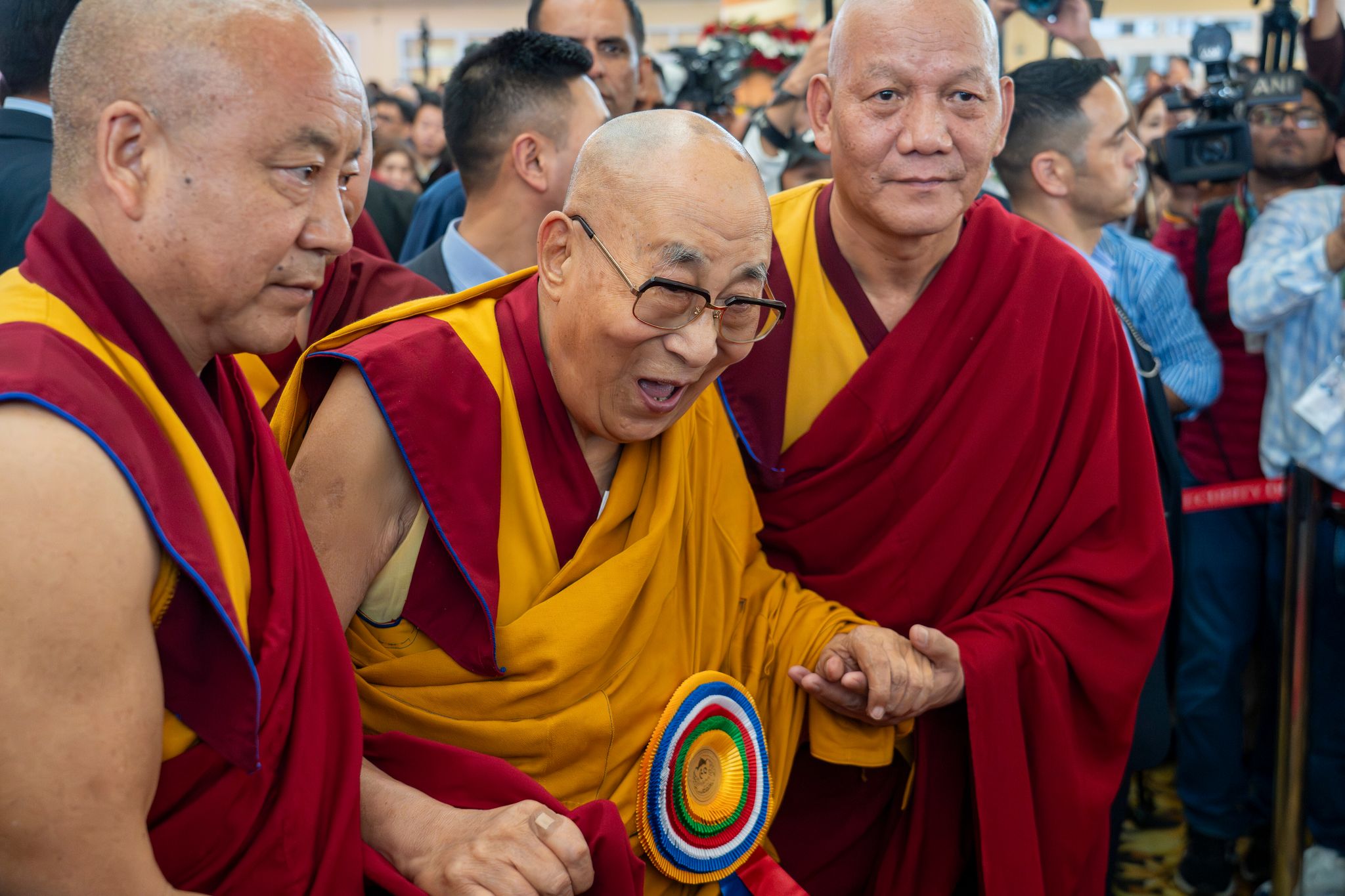
The Future of the Dalai Lama: Navigating Gender, Nationality, and China's Influence
For centuries, the spiritual institution of the Dalai Lama has served as a beacon for Tibetan Buddhists worldwide, embodying both profound spiritual leadership and a historical political role. As the 14th Dalai Lama, Tenzin Gyatso, approaches his 90th birthday, the question of his successor, the next Dalai Lama Alter, has been a topic of intense discussion, mired in geopolitical complexities and spiritual speculation. However, recent affirmations from His Holiness have brought clarity, albeit with revolutionary implications that challenge tradition and directly confront Beijing's assertions of control.
Previously, the Dalai Lama had alluded to the possibility that he might be the last in the revered 600-year-old lineage, particularly in light of China's repressive policies in Tibet. Yet, a more recent, resolute message has emerged from Dharamsala, India, the seat of the Tibetan government-in-exile: "The institution of the Dalai Lama will continue." This powerful declaration, made in the lead-up to his 90th birthday celebrations, not only assuages the anxieties of his devout followers but also sets the stage for a dramatic showdown over who holds the ultimate authority in identifying the next incarnation.
An Unprecedented Redefinition: Gender and Nationality in Succession
The Dalai Lama's statements go beyond merely affirming the institution's continuation; they introduce groundbreaking possibilities that could fundamentally alter the traditional understanding of the succession process. Historically, the search for a new Dalai Lama has involved identifying a child, typically a boy, within Tibet, who exhibits specific signs and characteristics of the deceased spiritual leader.
However, the 14th Dalai Lama has declared that his successor could be of any gender. This revolutionary perspective opens the door to the possibility of a female Dalai Lama, a concept that challenges centuries of patriarchal tradition within the lineage. While not entirely unprecedented in broader Buddhist history (there have been prominent female spiritual leaders and teachers), for the Dalai Lama lineage, it marks a significant evolution.
Equally profound is the assertion that the next Dalai Lama might not necessarily be of Tibetan nationality. This statement carries immense practical and geopolitical weight. Should the next incarnation emerge from a different cultural or national background, it would further broaden the global reach of Tibetan Buddhism and significantly complicate China's ability to exert physical control over the selection and upbringing of the chosen child within Tibet's borders. It effectively decentralizes the search, making it far more difficult for Beijing to impose its preferred candidate.
These declarations are not arbitrary; they reflect a deeply considered strategy to safeguard the authenticity and independence of the institution against external pressures, particularly from the Chinese Communist Party (CCP).
Beijing's Shadow: China's Assertions of Control
The question of the Dalai Lama's succession is not merely a spiritual matter; it is a critical geopolitical issue with high stakes for Tibet, China, and international human rights. Beijing views the Dalai Lama as a dangerous separatist and has long sought to control the reincarnation process, seeing it as a crucial lever to solidify its authority over Tibet.
China's claims to this authority are rooted in a dubious historical narrative, citing a 1793 ordinance from Imperial China that purportedly gave the emperor a say in the identification of high Buddhist lamas. Today, the officially atheist CCP insists that it has the final say on who will lead the six-century-old institution. A spokesperson for the Chinese Foreign Ministry explicitly stated that the reincarnation "must be chosen by drawing lots from a golden urn and approved by the central government," mirroring their controversial selection of the Panchen Lama.
This insistence on state control over a deeply spiritual process is widely condemned as an infringement on religious freedom. For the Tibetan people, the legitimate Who Decides the Next Dalai Lama? China's Claim vs. Spiritual Authority is paramount, and any candidate imposed by Beijing would be seen as illegitimate and a puppet of the Chinese government.
The history of China's relationship with Tibet has been marked by repression since the 1950s, leading the current Dalai Lama to flee to India in 1959. Exiled Tibetan leaders and human rights advocates consistently highlight severe human rights abuses in Tibet, including censorship of language and culture, mass surveillance, harsh penalties for dissent, and the systematic separation of families.
The Authentic Process: Spiritual Guidance vs. Political Imposition
In direct defiance of Beijing's claims, the Dalai Lama formalized his stance in a 2011 edict, which he has subsequently reaffirmed. This edict explicitly states that only his office, the Gaden Phrodrang Trust, holds the exclusive authority to recognize the future Dalai Lama. Any candidate imposed by Beijing, he has declared, would not be recognized by Tibetan Buddhists.
The authentic selection process, while not rigidly defined, involves a deeply spiritual methodology. It includes:
- Interpretation of Spiritual Signs: Monks and high lamas look for omens, dreams, and other auspicious signs that point towards the reincarnation.
- Consultation with Dharma Protectors: Buddhist deities believed to safeguard the Dharma are consulted through rituals and meditations.
- Guidance from Heads of Tibetan Buddhist Traditions: Senior lamas from the various schools of Tibetan Buddhism are involved in the discernment process.
- Search for a Child Reincarnation: Traditionally, a child born after the incumbent's death is sought, often exhibiting specific traits or memories linked to the previous Dalai Lama.
This intricate process is rooted in centuries of spiritual tradition, guided by profound belief and not by political decree. The Dalai Lama's firm stance ensures that the authenticity and integrity of this spiritual lineage are preserved, safeguarding it from political manipulation. This Dalai Lama Affirms Future: A Direct Challenge to Beijing's Control underscores the spiritual resilience of Tibetan Buddhism in the face of immense pressure.
The implication is clear: the spiritual leader's reincarnation will be identified through spiritual means, irrespective of geographical or political boundaries, and regardless of gender. This approach not only protects the institution from external interference but also broadens the potential pool of candidates, making the search for the next Dalai Lama Alter a truly global and spiritually guided endeavor.
Conclusion
The 14th Dalai Lama's recent statements represent a monumental moment in the history of Tibetan Buddhism. By definitively affirming the continuation of the institution and introducing the possibilities of a female or non-Tibetan successor, His Holiness has laid a strategic foundation for the future. These bold declarations serve multiple purposes: they reassure his followers, modernize the concept of reincarnation to reflect contemporary values, and, most crucially, erect formidable barriers against Beijing's relentless attempts to control the spiritual destiny of the Tibetan people. The battle for the soul of Tibet continues, with the spiritual authority of the Dalai Lama firmly asserting its independence against the political might of China.