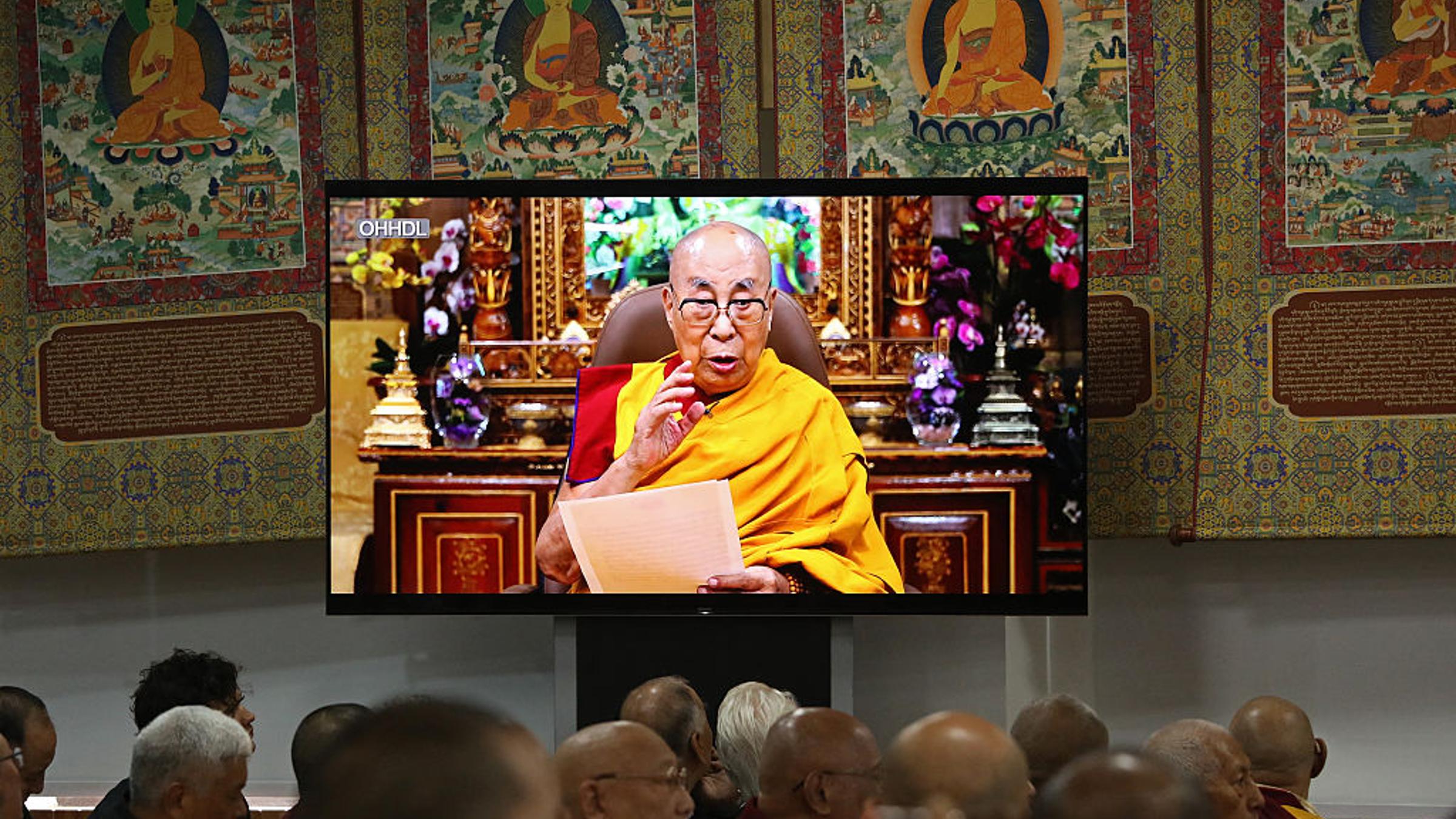
The Dalai Lama's Definitive Stance: A Resolute Future and Direct Challenge to Beijing
In a world grappling with uncertainty, the spiritual leader of Tibetan Buddhism, His Holiness the 14th Dalai Lama, has delivered a powerful and unequivocal message regarding the future of his revered institution. From the serene foothills of Dharamsala, India, where thousands gathered to celebrate his 90th birthday, Tenzin Gyatso affirmed, "The institution of the Dalai Lama will continue." This declaration is more than just a statement of intent; it marks a significant Dalai Lama Alter in his previous messaging, transforming a conditional possibility into a firm certainty. It directly confronts decades of Chinese efforts to control the succession process and represents a pivotal moment for the future of Tibetan spiritual and cultural identity.
For years, the Dalai Lama had alluded to the possibility of being the "last" Dalai Lama, suggesting his 90th birthday would be a critical juncture for evaluating the 600-year-old institution's persistence amidst relentless repression from China. His recent, resolute answer signals not just continuity but also challenges ahead, specifically outlining a succession process that places his spiritual authority directly at odds with Beijing's geopolitical ambitions.
A Resolute Affirmation: The Enduring Legacy of the Dalai Lama Institution
The jubilation in Dharamsala on July 6th, as Tibetan Buddhists spilled out of temples and courtyards, was palpable. Their spiritual leader, Tenzin Gyatso, delivered a message that resonated deeply, dispelling years of speculation. Previously, the Dalai Lama had indicated a period of introspection around his 90th year, pondering "whether or not" the ancient institution would persist. This cautious stance was undoubtedly influenced by the ongoing repression by the People's Republic of China, which has long sought to undermine his authority and control the narrative around Tibetan Buddhism.
However, the recent affirmation marks a profound Dalai Lama Alter in this position. It's a strategic move, shifting from an evaluation of possibility to a definitive declaration of continuation. This resolute answer is a beacon of hope for Tibetan Buddhists globally, ensuring that the spiritual lineage, central to their identity and faith, will endure. The clarity provided by His Holiness offers solace and direction, vital in an era where cultural heritage often faces existential threats. It underscores the profound resilience of Tibetan spiritual traditions, nurtured in exile but steadfast in their commitment to their heritage.
For global observers, this statement carries immense geopolitical weight. The continuation of the Dalai Lama institution, under terms dictated by spiritual tradition rather than political imposition, directly challenges Beijing's long-standing claims. It emphasizes that spiritual authority cannot be legislated or controlled by an atheist state, reinforcing the principle of religious freedom against governmental overreach.
Beijing's Shadow: The Geopolitical Battle for Spiritual Authority
The question of the Dalai Lama's succession is far from a purely theological matter; it is steeped in high geopolitical stakes, particularly concerning China's relationship with Tibet. Historically, the Dalai Lama has embodied a unique dual role as both a spiritual and political leader. This dynamic was fundamentally disrupted when China seized control of Tibet in the 1950s, prompting the current Dalai Lama to flee to India and establish a Tibetan government-in-exile in Dharamsala.
Since then, China has consistently accused the Dalai Lama of being a separatist, despite his consistent advocacy for the Middle Way Approach, seeking genuine autonomy for Tibet within China, not outright independence. The officially atheist Chinese Communist Party (CCP) paradoxically insists on having the final say on who will lead the six-century-old institution. This assertion echoes a historical precedent: a 1793 Qing Dynasty ordinance, which Imperial China used to influence the reincarnation process of high lamas. Today, the CCP wields this historical claim, alongside its political might, to justify its demand for approval, often citing the "Golden Urn" lottery system as a method for selection.
The implications of China's insistence are dire for Tibetans living under its rule. Exiled Tibetan leaders and human rights advocates consistently report severe repression, including:
- Separation of families: Policies that disrupt community and familial bonds.
- Censorship of Tibetan language and culture: Efforts to dilute and erase Tibetan identity.
- Mass surveillance: Extensive monitoring to suppress dissent.
- Harsh penalties for dissent: Punishments for any perceived opposition to CCP rule.
- Religious restrictions: Control over monasteries, religious practice, and the education of monks and nuns.
A Beijing-appointed Dalai Lama would be seen by the majority of Tibetan Buddhists as illegitimate, further solidifying China's oppressive grip on Tibetan identity and faith. This makes the Dalai Lama's recent clarification of the succession process all the more critical in safeguarding the authenticity and spiritual integrity of the institution.
The Dalai Lama's Counter-Strategy: Defining the Future Succession Process
In a powerful strategic move, the Dalai Lama has formalized and reaffirmed the process for identifying his successor, directly countering Beijing's claims. His 2011 edict, now reiterated with renewed emphasis, clearly states that only the Gaden Phrodrang Trust, which is the official office of the Dalai Lama, possesses the authority to recognize the future reincarnation. This edict fundamentally rejects any attempt by the Chinese government to impose a candidate, ensuring that any Beijing-selected individual would not be recognized by the faithful.
The traditional selection process, while not explicitly defined in every detail, involves a complex interplay of spiritual signs, interpretations, and consultations:
- Spiritual Signs: Tibetan Buddhist lamas and regents search for omens, dreams, and visions that point towards the reincarnation.
- Dharma Protectors: Consultations with Buddhist deities, believed to offer guidance through Oracles.
- Heads of Tibetan Buddhist Traditions: Senior lamas from the different schools of Tibetan Buddhism are consulted and play a crucial role in validating the findings.
Historically, the search has been for a child, typically a boy, born in Tibet, who displays specific characteristics and memories from the previous life. However, in another significant Dalai Lama Alter to traditional norms, His Holiness has previously stated that he could reincarnate as a girl. More recently, he has added that the successor need not even be of Tibetan nationality, indicating a remarkable flexibility designed to ensure the institution's survival and adaptability in a globalized world, potentially outside of China's direct reach.
This forward-thinking approach demonstrates a profound understanding of the challenges ahead. By empowering the Gaden Phrodrang Trust and outlining a flexible framework, the Dalai Lama ensures that the selection remains within the purview of spiritual authority, independent of political interference. This strategy not only protects the sanctity of the reincarnation but also galvanizes global support for Tibetan self-determination and religious freedom. It's a testament to the resilience of a spiritual tradition determined to preserve its essence despite external pressures.
The Path Forward: Resilience and Hope in Exile
The Dalai Lama's recent announcement strengthens the resolve of the Tibetan government-in-exile in Dharamsala and the global Tibetan diaspora. It reinforces their commitment to preserving their unique cultural and religious heritage, even while disconnected from their homeland. Maintaining spiritual independence is paramount, serving as a beacon of hope and a symbol of defiance against oppression.
For those interested in supporting Tibetan culture and the principles of religious freedom, several actions can be taken:
- Educate Yourself: Learn more about Tibetan Buddhism, its history, and the current challenges faced by the Tibetan people.
- Advocate for Human Rights: Support organizations working to protect human rights in Tibet and raise awareness about the situation under Chinese rule.
- Support Tibetan Cultural Preservation: Engage with and support Tibetan cultural centers and initiatives that promote the language, arts, and traditions.
- Promote Dialogue: Encourage discussions about religious freedom and the right of spiritual institutions to self-determination, free from state interference.
Conclusion: A Future Forged in Faith and Defiance
The Dalai Lama's definitive affirmation of his institution's future is a moment of profound significance. It not only offers solace and direction to millions of Tibetan Buddhists worldwide but also issues a direct and powerful challenge to Beijing's long-standing attempts to control their spiritual destiny. This critical Dalai Lama Alter in his previous conditional stance underscores the unwavering resilience of a 600-year-old tradition and its spiritual leader. By clearly defining the succession process and empowering his own office, His Holiness ensures that the future Dalai Lama will be chosen based on spiritual authority, not political imposition. In a world grappling with authoritarianism, this stands as a testament to the enduring power of faith, cultural identity, and the indomitable spirit of a people determined to preserve their heritage against all odds.